
Philadelphia Small Business Resources: The 2026 Entrepreneur’s Guide to Growth
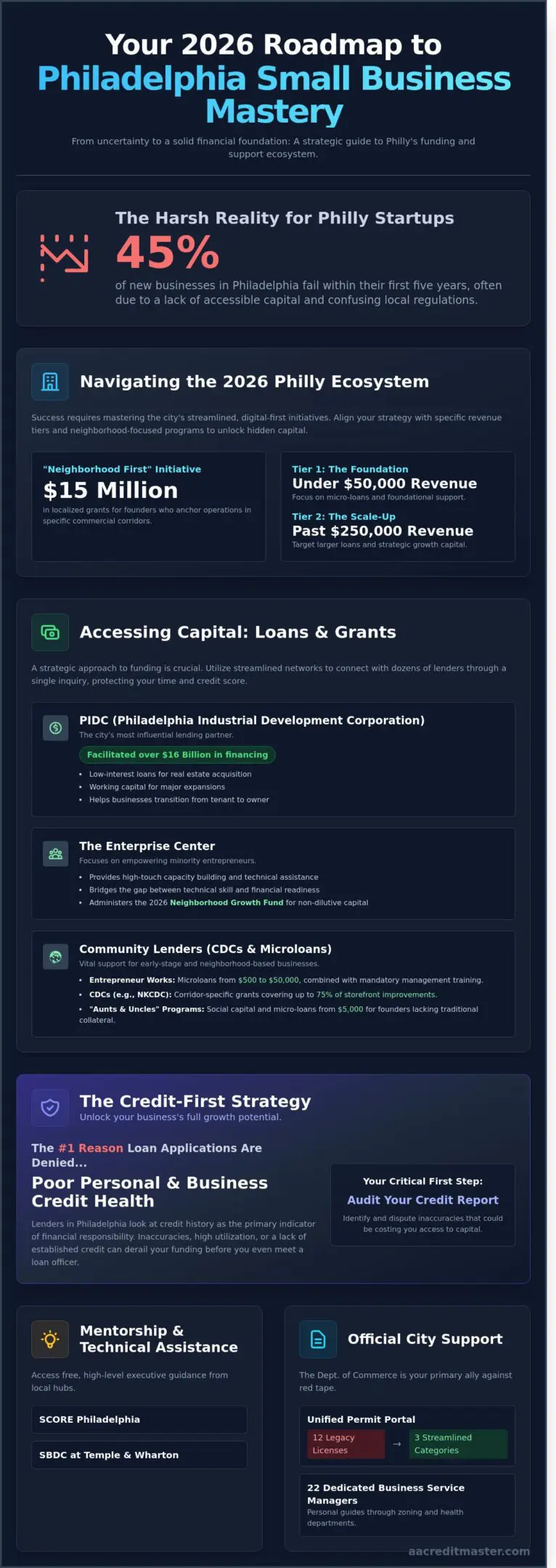
According to the Bureau of Labor Statistics, nearly 45% of new businesses in Philadelphia fail within their first five years. It’s a harsh reality that often stems from a lack of accessible capital and the confusion of local regulations. You’ve likely felt the frustration of strict lending requirements or the isolation of the startup phase. You deserve a clear path to growth. By leveraging the right Philadelphia small business resources, you can transform these obstacles into a solid financial foundation. You can take back control of your company’s future by mastering the local ecosystem to secure the funding and mentorship necessary for your success.
This 2026 guide provides the exact roadmap you need to move from uncertainty to mastery. You’ll discover how to access specific grants from the Philadelphia Department of Commerce and low-interest loans through PIDC. We’ve curated a list of strategic partners who understand the unique pulse of the Philly market. If you follow this strategic framework, then you can establish the credit health and operational stability required to scale your business with confidence. Let’s build your legacy together.
Key Takeaways
- Discover why 2026 is a milestone year for Philly founders and how to leverage new digital infrastructure and localized neighborhood grants.
- Navigate the “Capital Stack” with a roadmap of Philadelphia small business resources designed to connect you with dozens of lenders through a single inquiry.
- Identify the #1 reason loan applications are denied and learn how to audit your credit report for inaccuracies that could derail your funding.
- Access free, high-level executive mentorship and technical assistance from local hubs like SCORE Philadelphia and the SBDC at Temple and Wharton.
- Take back control of your financial legacy by mastering the credit-first strategy required to unlock your business’s full growth potential.
Navigating the Philadelphia Small Business Ecosystem in 2026
Philly rewards the prepared. As we move through 2026, the city’s entrepreneurial environment has shifted from a fragmented collection of offices into a streamlined, digital-first powerhouse. Success requires a mastery of both city-run initiatives and private non-profit support. You’ll find that Philadelphia small business resources are now divided into clear tiers based on your annual revenue and neighborhood impact. If you align your growth strategy with these tiers, then you unlock capital and support that remains invisible to your competitors.
Understanding Philadelphia’s economic landscape is the first step toward financial mastery. The 2026 “Neighborhood First” initiative has funneled $15 million into localized grants, prioritizing founders who anchor their operations in specific commercial corridors. You aren’t just running a shop; you’re building a legacy in a city that finally has the digital infrastructure to support you. Take back control of your timeline by identifying your tier early. Tier 1 focuses on startups with under $50,000 in revenue, while Tier 2 targets established entities looking to scale past the $250,000 mark.
Official City Support: The Department of Commerce
The Department of Commerce is your primary ally against red tape. On January 1, 2026, the city launched the “Unified Permit Portal,” which consolidated 12 legacy licenses into three streamlined categories. You should connect with your local Business Services Manager immediately. These 22 dedicated professionals act as your personal guides through the zoning board and health department. Use the Business Resource Finder to pull 2025 census data for your specific zip code. This data allows you to pitch investors with precision rather than guesswork.
The Power of Philadelphia CDCs
Community Development Corporations (CDCs) provide the granular support that City Hall cannot. Organizations like the New Kensington Community Development Corporation (NKCDC) offer technical assistance tailored to the 19125 and 19134 zip codes. If you operate on Girard or Germantown Avenue, then you qualify for corridor-specific grants that cover up to 75% of storefront improvements. Don’t overlook the “Aunts & Uncles” programs. These initiatives provide social capital and micro-loans starting at $5,000 for founders who lack traditional collateral. This is how you rebuild your community while you rebuild your balance sheet. Accessing these Philadelphia small business resources ensures your business remains a permanent fixture in the neighborhood.
Accessing Capital: Loans, Grants, and Financial Support
Mastering your capital stack is the first step toward long-term stability. Most Philly startups begin with a mix of personal savings and microloans before graduating to SBA-backed financing for major expansions. Accessing these Philadelphia small business resources requires a strategic approach rather than a desperate search. The Philadelphia Business Lending Network offers a streamlined solution. You submit one inquiry and gain exposure to over 30 participating lenders. This efficiency protects your time and prevents the damage caused by multiple hard credit pulls across different institutions.
PIDC and The Enterprise Center
PIDC stands as the city’s most influential lending partner, having facilitated over $16 billion in financing since its inception in 1958. They offer low-interest loan products specifically designed for real estate acquisition and working capital. If you want to own your storefront, PIDC provides the leverage to transition from tenant to owner. The Enterprise Center focuses on empowering minority entrepreneurs through high-touch capacity building. They bridge the gap between technical skill and financial readiness. You should prepare now for the 2026 Neighborhood Growth Fund grant cycles. These specific windows offer non-dilutive capital that can transform your balance sheet. The Philadelphia Department of Commerce works closely with these entities to ensure local businesses stay informed about shifting eligibility requirements.
Community Lenders and Microloans
Entrepreneur Works provides a lifeline for businesses needing microloans between $500 and $50,000. They combine capital with mandatory one-on-one training, ensuring you have the management skills to deploy the funds effectively. For those seeking market-rate loans without the rigid requirements of big banks, the Cooperative Business Assistance Corp (CBAC) serves as a vital intermediary. They specialize in serving under-resourced neighborhoods where traditional credit can be scarce. To succeed here, you must arrive with a “loan-ready” package. This includes three years of federal tax returns, a detailed debt schedule, and a personal financial statement. If your current credit profile limits your options, you can take back control of your financial future by addressing derogatory items before you apply. A higher credit score translates directly into lower interest rates. This mastery over your numbers ensures your business remains profitable rather than just busy.
Once you’ve mastered the local lending landscape, you may find your business ready for more complex investment programs. For specialized due diligence and project management at this stage, you can visit Swiss Alpha Matrix to see how an independent advisory firm can help.
The Credit-First Strategy: Preparing for Philly Resources
Philadelphia entrepreneurs often hit a wall when applying for funding. Data shows that 82% of business resource denials in the city result from poor personal or business credit scores. You can’t build a legacy on a shaky foundation. To access the best Philadelphia small business resources, you must treat your credit score as a primary business metric. This strategy requires a proactive approach to ensure you aren’t disqualified before you even sit down with a lender.
- Step 1: Audit your report for inaccuracies. A 2021 FTC study found that 25% of consumers had errors on their credit reports that negatively impacted their scores. You must identify these clerical mistakes or outdated entries that could derail a loan application.
- Step 2: Understand FICO and SBA requirements. The SBA Philadelphia District Office and its lending partners often look for a minimum FICO SBSS score of 155 for their 7(a) small loan program. If your score is lower, your application might be rejected automatically by automated underwriting systems.
- Step 3: Establish business tradelines early. Reliability is the currency of the business world. Open Net-30 accounts with vendors like Uline or Grainger to build a business credit profile that is independent of your personal social security number.
- Step 4: Leverage professional consulting. Don’t wait for a rejection letter to address your credit health. Professional intervention can remove derogatory items like late payments or collections that might cost you a $50,000 grant or a low-interest line of credit.
Credit as Your Most Valuable Business Asset
A 700+ credit score is the key to unlocking the most competitive Philadelphia small business resources. It provides you with the leverage needed to negotiate better terms and higher limits. If you master your credit, then you lower your cost of capital across the board. Credit restoration is a strategic business investment that secures your company’s future rather than a temporary repair for past mistakes.
Avoiding Common Credit Pitfalls for Philly Founders
Founders often make the mistake of using personal credit cards for business inventory without a clear separation strategy. This raises your utilization and tanks your score. Watch out for inaccurate public records, such as resolved city tax liens that still show as “unpaid” on your report. Take back control by adopting a Master Mentor approach to your finances. We focus on personalized strategy to ensure your credit reflects your true potential and provides you the freedom to grow.
Mentorship and Technical Assistance Hubs in Philadelphia
You don’t have to navigate the complexities of the local market alone. Taking back control of your business trajectory requires expert guidance from those who’ve already mastered the system. SCORE Philadelphia stands as a primary pillar for this growth, offering a network of over 100 volunteer mentors. These retired executives provide free, high-level coaching that helps you avoid the common pitfalls of scaling. Whether you’re refining a business plan or managing a crisis, this organization provides the clinical expertise you need to stabilize your operations.
Finding the right Philadelphia small business resources transforms a struggling shop into a neighborhood staple. Accessing these hubs early ensures you aren’t just reacting to problems; you’re proactively building a legacy. If you want to secure the funding these mentors help you plan for, you need a pristine financial profile. Take back control of your credit score to unlock better interest rates and fuel your expansion.
University-Backed Support Systems
The Temple University SBDC is a vital resource for neighborhood-based retailers. In 2023, they provided specialized training to over 600 local entrepreneurs, focusing on the tactical realities of running a storefront. They offer a clear path forward for owners who need to modernize their inventory systems or digital presence. Their workshops are designed to be short and punchy, prioritizing immediate benefits for the business owner.
If your goals involve high-growth tech or professional services, the Wharton SBDC provides the technical authority you need. They specialize in consulting for emerging sectors in University City and the Navy Yard. You can also leverage student-led consulting projects through these universities. These programs provide 12 weeks of intensive market research and strategic analysis. This is a cost-effective way to gain data-driven insights that would otherwise cost thousands of dollars through private firms.
Neighborhood-Specific Mentorship
The Center City District (CCD) offers specific tools for retailers looking to optimize their physical presence. They provide detailed reports on retail vacancy and pedestrian traffic across 233 blocks in the city core. This data allows you to make informed decisions about location and marketing. Joining your local Business Improvement District (BID) or Community Development Corporation (CDC) is another strategic move. These groups provide collective marketing power that individual small businesses can’t achieve alone.
Networking isn’t just about exchanging business cards; it’s about revenue restoration. Prepare for the 2026 Philly Startup Week, where peer-to-peer networking events connect founders with actual investors. For arts-based businesses, the Cultural Alliance provides niche resources to bridge the gap between creative passion and financial mastery. These organizations act as your financial guardian, ensuring you have the literacy and support to thrive in a competitive landscape.
Beyond these local hubs and annual events, joining a dedicated professional networking group can provide a consistent source of referrals and support. If that sounds like the right next step for your business, you can check out Network In Action.
Partnering for Mastery: How AA Credit Master Empowers Philly Growth
Most Philadelphia small business resources focus on networking or city grants, but they often overlook the engine that drives real expansion: credit mastery. Without a solid credit profile, even the most innovative startup in Fishtown or Center City hits a financial ceiling. Allen & Allen, Inc. bridges that gap from our office at 1515 Market Street. Being a local ally, we understand the specific economic pulse of the city. We don’t rely on generic, automated software that misses the nuances of your financial history. Instead, we provide a personalized strategy designed to build a lasting business legacy. It’s time to stop guessing and start growing.
Tailored Solutions for Philadelphia Businesses
Your business needs credit that stands up to the scrutiny of top-tier institutions like TD Bank or Citizens Bank. We help you build a robust profile that separates your personal assets from your professional liabilities. If your personal FICO score is below the 680 threshold often required for SBA 7(a) loans, your growth stalls. We specialize in restoring individual creditworthiness so you can confidently secure personal guarantees. This ensures you meet the 155-point FICO SBSS minimum required for many federal lending programs. Visit our Market Street office for a consultation to map your path to mastery and secure the capital your vision deserves.
Your Financial Guardian in the City of Brotherly Love
We provide an empathetic path to financial restoration. It’s a professional, non-judgmental process focused entirely on results. We stand between you and impersonal credit bureaus to protect your future. If you have derogatory items holding you back, we use a methodical, step-by-step approach to dispute and remove inaccuracies. This isn’t just about a number; it’s about regaining your power. Our experts treat your business with the same care you do, ensuring you aren’t just another file in a database. You can take back control of your business’s financial destiny today and stop letting past credit hurdles dictate your future success.
Mastering your credit is the most effective way to utilize Philadelphia small business resources to their full potential. When your financial foundation is strong, every other resource becomes more accessible. We provide the technical expertise and the emotional support needed to navigate the complex world of credit reporting. Whether you are looking to purchase your first commercial property or simply need a revolving line of credit for inventory, we ensure you are prepared. Take the first step toward financial freedom and build a business that lasts for generations.
Master Your Growth in Philadelphia’s 2026 Economy
Success in the upcoming year requires a proactive approach to your financial profile. Philadelphia’s evolving landscape offers massive potential, but accessing capital depends on your readiness to meet rigorous lending standards. If you prioritize credit health now, then you position your company to capture the $50,000 grants and low-interest loans defining the 2026 market. You need a partner who understands the local landscape and the clinical reality of credit reporting. Our expert specialists at 1515 Market Street, Suite 1200, offer tailored strategies for both individual and business credit restoration. We don’t use generic software; we provide the human-led mastery required to navigate Philadelphia small business resources effectively. It’s time to remove the barriers between your current standing and your ultimate goals. Take back control of your financial narrative and build a legacy that lasts. Secure Your Business’s Financial Future with a Credit Mastery Consultation today. Your path to financial freedom is ready when you are.
Frequently Asked Questions
What are the best grants for small businesses in Philadelphia right now?
You can secure immediate funding through the Quality of Life Grant which offers $5,000 for neighborhood businesses or the Merchants Fund which provides stabilization grants up to $10,000. These programs focus on corridor improvements and operational support for businesses active for at least 3 years. You can apply through the Philadelphia Commerce Department website to access these Philadelphia small business resources. Taking back control of your capital starts with identifying these non-dilutive funds.
How do I get a small business loan in Philly if my credit is poor?
Apply for capital through Community Development Financial Institutions like PIDC or Finanta because they accept FICO scores as low as 580. These lenders look beyond derogatory items to evaluate your actual cash flow and business plan. PIDC offers working capital loans starting at $5,000 for city-based entrepreneurs who can’t qualify at traditional banks. We help you navigate these lenders so you can rebuild your financial standing while growing your company.
Where can I find free legal or accounting help for my Philly startup?
Access pro bono legal services through Philadelphia VIP or professional financial consulting at the Temple University Small Business Development Center. Philadelphia VIP connects owners with volunteer attorneys for lease reviews and entity formation. The Temple SBDC provides over 20 hours of free accounting guidance to new startups every year. These resources ensure your foundation is solid without draining your initial seed money or risking your financial future.
What is the Philadelphia Business Lending Network and how does it work?
The Philadelphia Business Lending Network is a city portal that connects you to 30 local lenders through one simple pre-application. You submit your business profile once and interested banks or CDFIs contact you within 5 business days with potential offers. This system saves time and prevents multiple hard inquiries on your credit report. It’s a powerful tool for finding Philadelphia small business resources tailored to your specific industry and growth stage.
Do I need a specific credit score to qualify for an SBA loan in PA?
You typically need a minimum FICO score of 640 to qualify for an SBA 7(a) loan through Pennsylvania lenders. Banks also use the FICO Small Business Scoring Service where a minimum score of 155 is often required for expedited processing. If your score is lower, you can still qualify by providing 20 percent collateral or a stronger down payment. Master your credit profile now to unlock these lower interest rates and achieve long-term mastery.
Which Philadelphia CDCs offer the most support for new businesses?
The Enterprise Center in West Philly and the New Kensington CDC provide the most robust technical assistance for new owners in the city. The Enterprise Center manages a $10 million loan fund and offers 1-on-1 coaching for minority entrepreneurs. NKCDC focuses on corridor management and has assisted over 200 businesses with storefront improvement grants since 2020. These organizations act as your neighborhood mentors to ensure your business survives its first critical years.
How can I separate my personal credit from my business credit in Philadelphia?
Separate your financial identities by registering your business as an LLC and obtaining a federal EIN from the IRS. You must open a dedicated business bank account and register with Dun & Bradstreet to receive a D-U-N-S number. This process creates a distinct profile that protects your personal assets from business liabilities. When you build a strong business profile, you gain the freedom to scale without risking your family’s personal legacy.
What are the common mistakes Philly owners make when applying for city resources?
Most Philly owners fail to secure funding because they lack a valid City Tax Clearance Certificate or submit incomplete financial statements. Nearly 40 percent of applications are delayed because the owner hasn’t updated their commercial activity license. Ensure your Philadelphia tax account is in good standing at least 30 days before you apply. Avoid these pitfalls by maintaining organized records and verifying your eligibility before the city’s strict deadlines.